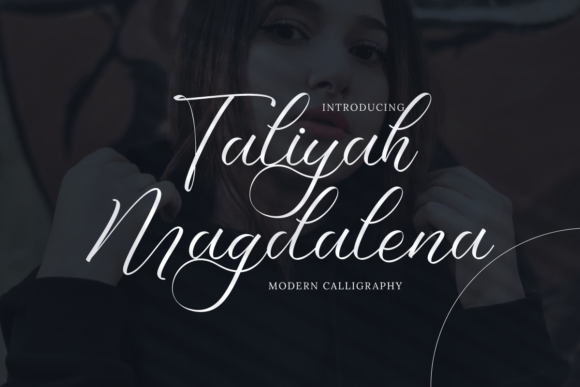
Taliyah Magdalena: A Delicate Handwritten Font
Taliyah Magdalena is a graceful, hand-crafted typeface that captures the warmth and nuance of real pen-on-paper writing. Every letter is thoughtfully shaped—neither overly ornate nor too minimal—with subtle variations in stroke weight, gentle curves, and balanced spacing that invite the eye to linger. It’s not just legible; it’s expressive. Designed for clarity and charm in equal measure, Taliyah Magdalena stands apart from generic script fonts by honoring rhythm, proportion, and intentionality.
Why This Font Resonates Across Different Roles
What makes Taliyah Magdalena meaningful isn’t just its appearance—it’s how it serves different goals. A freelance designer might reach for it to add quiet sophistication to a wedding invitation suite. A small business owner launching a handmade soap line may choose it to reflect care and authenticity on product labels. Meanwhile, an educator creating printable classroom resources could use it to soften academic content and make learning materials feel more approachable. The same font carries different weight depending on who’s using it—and why.
For Beginners: Gentle Entry into Typography
If you’re just starting to explore fonts beyond default system options, Taliyah Magdalena offers a low-pressure way to experiment with visual tone. Its letters are distinct enough to read easily—even at smaller sizes—and don’t rely on extreme flourishes that can look chaotic when misused. You won’t need advanced layout knowledge to get good results. Try it in Canva or Google Docs for a birthday card, social media quote graphic, or personal journal cover. No tutorials required—just pick a clean background, pair it with a simple sans-serif for body text, and let the elegance speak for itself.
For Designers & Creatives: Precision Meets Personality
Experienced designers appreciate how Taliyah Magdalena balances personality with practicality. Unlike many handwritten fonts that sacrifice consistency for charm, this one maintains even baseline alignment and predictable letterfit—making it reliable for longer passages like poetry collections, boutique packaging copy, or editorial features. Its OpenType features (if available in your version) may include alternate characters and ligatures, giving you subtle control over rhythm without manual tweaking. When paired with muted palettes or tactile textures—linen paper, watercolor washes, soft shadows—it elevates mood without overwhelming message.
For Educators & Content Creators
In learning environments, tone matters as much as information. Taliyah Magdalena helps educators signal warmth, encouragement, and human connection—especially in digital spaces where cold interfaces can feel isolating. Think: a welcome slide for a virtual workshop, handwriting-style annotations on a student feedback PDF, or a beautifully typeset reading passage for early literacy practice. Its legibility supports accessibility, while its aesthetic reinforces empathy. It’s not about “dumbing down” content—it’s about meeting learners where they are, visually and emotionally.
For Entrepreneurs & Small Business Owners
When you’re building a brand with limited time and budget, every design choice should pull double duty. Taliyah Magdalena works hard: it communicates craftsmanship, sincerity, and attention to detail—all without requiring custom illustration or complex branding systems. A local florist might use it for seasonal promo emails; a ceramicist could apply it to stamp-style packaging tags; a wellness coach may feature it in mindful breathing guide headers. Importantly, it scales well—from Instagram story text to printed thank-you cards—so you invest once and reuse thoughtfully.
What to Consider Before You Use It
Like any tool, Taliyah Magdalena shines brightest when matched to realistic needs. Ask yourself:
- Is readability critical? It excels in headlines, short quotes, and decorative contexts—but avoid dense paragraphs or legal disclaimers where clarity trumps style.
- Do you need multilingual support? Check whether your version includes extended Latin characters, diacritics, or punctuation suited to your audience’s language.
- Where will it appear? On screen? In print? Some handwritten fonts render poorly at small sizes on low-resolution displays. Taliyah Magdalena holds up better than most—but test it in your actual environment before finalizing.
- What’s your licensing context? If you’re designing for clients or selling digital products (like Canva templates), confirm the license permits commercial use—and whether web embedding or app integration is covered.
Real-World Uses That Work Well
A blogger writing about slow living uses Taliyah Magdalena for section dividers and pull quotes—adding texture without distracting from thoughtful prose. A yoga studio prints class schedules on recycled paper using this font for event titles, reinforcing values of mindfulness and sustainability. A high school art teacher creates rubrics with handwritten-style headers to reduce perceived formality and encourage student engagement. None of these require coding, expensive software, or years of training—just intention and a clear sense of purpose.
How It Compares to Other Handwritten Options
Not all delicate scripts behave the same way. Some prioritize flourish over function, others lean too casual for professional settings. Taliyah Magdalena occupies a thoughtful middle ground: refined but not stiff, personal but not sloppy, elegant but never elitist. It doesn’t shout—it invites. That makes it unusually versatile across mediums and moods. Where other fonts demand attention, this one earns it through quiet consistency.
Does It Fit Your Next Project?
Consider reaching for Taliyah Magdalena if you’re aiming for:
- A touch of humanity in digital communication
- Elevated yet approachable branding for artisanal or service-based businesses
- Printed materials where tactility and tone matter—invitations, certificates, gift tags
- Educational resources designed to feel supportive rather than institutional
- Creative side projects where joy and self-expression are central
It’s less ideal if you need ultra-narrow tracking for tight layouts, full Cyrillic or Arabic language coverage, or monospaced functionality. But within its natural range—graceful, readable, emotionally resonant handwriting—it performs with rare reliability.
Ultimately, Taliyah Magdalena isn’t about trendiness. It’s about finding a voice—not yours alone, but one that harmonizes with your message, your audience, and the space you’re shaping. Whether you’re sketching ideas on paper or exporting a final PDF, it reminds you that typography, at its best, is both craft and kindness.