Holla Holly: A Stylish Handwritten Font
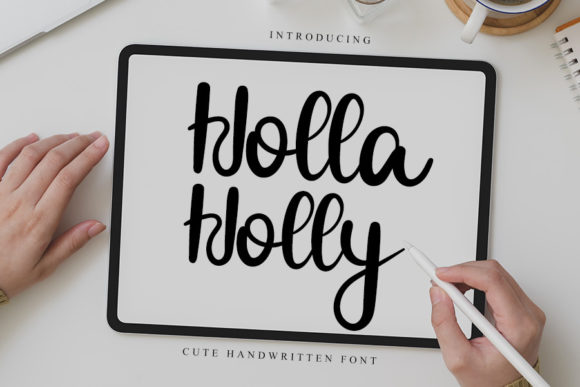
Holla Holly is a contemporary handwritten font rooted in classic calligraphy—but reimagined for today’s design needs. It strikes a thoughtful balance: not too thin, not too thick; with rhythm in its strokes and warmth in its curves. Each character flows naturally, yet maintains crisp legibility across sizes and contexts. Designed with intention, Holla Holly avoids the fragility of overly delicate scripts and the stiffness of rigid sans-serifs—landing instead in that rare sweet spot where elegance meets usability.
Why This Font Resonates Across Different Roles
What makes Holla Holly meaningful isn’t just how it looks—it’s how it fits into real workflows and creative intentions. A freelance designer evaluating fonts for a client’s wedding suite cares about tone and timelessness. A small business owner updating their Instagram bio wants something that feels personal but still professional. A teacher crafting classroom posters needs clarity at a glance—and maybe a touch of joy. Holla Holly speaks to all of them, but not in the same way.
For Beginners and Hobbyists
If you’re just starting out with Canva, Google Slides, or even basic Word documents, Holla Holly offers an easy entry point into expressive typography. Its balanced weight means it won’t vanish at small sizes or overwhelm at large ones. You don’t need advanced knowledge of kerning or OpenType features to get good results. Try using it for a handmade greeting card, a Pinterest quote graphic, or a simple logo mockup—no tutorials required. What matters most here is confidence: the ability to pick a font and trust it will look intentional, not accidental.
For Educators and Content Creators
Educators often juggle clarity and connection—especially when designing handouts, lesson slides, or digital newsletters. Holla Holly adds approachability without sacrificing readability. Imagine labeling a science diagram with soft, human-feeling labels—or writing a warm welcome message for new students on your class website. Its variation in stroke width subtly guides the eye, helping key ideas stand out organically. For bloggers or podcasters building a visual brand, Holla Holly can become part of a consistent voice—friendly but focused, creative but grounded.
For Designers and Brand Professionals
Experienced designers appreciate Holla Holly’s attention to detail: the subtle contrast between thick downstrokes and thin upstrokes, the generous spacing that prevents crowding in headlines, and the way letters connect with quiet intention—not forced ligatures, but natural flow. It works well in layered compositions: pair it with a clean sans-serif for body text, use it solo over a textured background, or scale it boldly for signage. Because it’s not overly ornate, it adapts across mediums—from printed stationery to mobile app splash screens—without needing heavy adjustments.
For Entrepreneurs and Small Business Owners
When you’re wearing ten hats—including “brand strategist”—you need tools that deliver impact without complexity. Holla Holly supports that. It communicates care and authenticity without leaning into trendiness that dates quickly. A local bakery might use it for chalkboard-style menu boards or packaging labels; a wellness coach could apply it to guided journal covers or email headers. Its versatility means fewer font swaps across platforms, which saves time and strengthens recognition. And because it’s designed for legibility, it performs well in both print and digital—no last-minute redesigns when switching from Instagram post to business card.
What Matters Most—Depending on Your Priorities
Your goals shape what you’ll value in Holla Holly. Here’s how different priorities play out:
- Ease of use: No learning curve. Install once, use anywhere—compatible with major design apps, web platforms, and even some Cricut software.
- Quality: Every glyph is carefully shaped—not auto-generated or AI-smoothed. That shows in subtle details like the tapered end of the lowercase “e” or the gentle lift in the “r.”
- Flexibility: Works across projects—from elegant invitations to playful social posts—because it avoids extremes in weight or style.
- Presentation: Adds polish without effort. Even a simple phrase like “Thank You” gains sincerity and sophistication in Holla Holly.
- Creativity: Encourages experimentation. Try layering it with watercolor textures, animating individual letters, or using it as a base for custom monograms.
- Long-term usefulness: Not tied to a fleeting aesthetic. Inspired by enduring calligraphic principles, it’s built to age gracefully—not fade with the next design trend.
A Few Real-World Examples
A freelance illustrator uses Holla Holly to sign limited-edition prints—its organic rhythm mirrors their hand-drawn style while ensuring their name remains legible. A homeschool parent crafts weekly schedule boards with it, finding that children respond more warmly to its friendly shape than to rigid block fonts. A boutique hotel incorporates Holla Holly into its digital check-in interface, creating a sense of curated hospitality before guests even step through the door.
None of these users needed to study typographic theory first. They simply saw that Holla Holly matched their intent—whether that was warmth, distinction, simplicity, or cohesion.
Does Holla Holly Fit Your Next Project?
Ask yourself: Is this for something meant to feel human, memorable, and considered? Does it benefit from a touch of artistry without demanding technical mastery? Will it live somewhere people spend time—not just glance at? If yes, Holla Holly is worth trying.
It’s not the right choice if you need ultra-narrow tracking for tight label space, or if your project demands strict monospacing or multilingual support beyond Latin-based languages. But for everyday expression—with heart, clarity, and quiet confidence—Holla Holly holds space beautifully.
Whether you’re typing a caption, sketching a logo concept, drafting a syllabus, or refreshing your shop’s packaging, Holla Holly invites you to slow down just enough to make it feel like yours.