Handy Ink: Why This Handwritten Font Is Reshaping Creative Expression in a Digital-First World
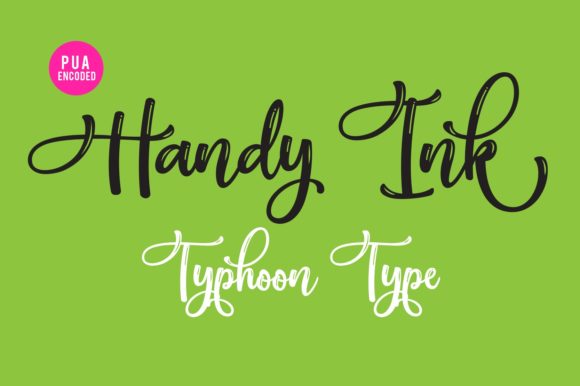
In an era defined by algorithmic precision, AI-generated visuals, and hyper-optimized interfaces, something quietly remarkable is happening across design studios, marketing teams, and founder-led startups: professionals are reaching—not for another sleek sans-serif—but for Handy Ink. This isn’t nostalgia masquerading as strategy. It’s a deliberate, values-driven pivot toward authenticity, warmth, and human rhythm in visual communication. Handy Ink is a fresh and funky handwritten font with a unique style—crafted not to mimic calligraphy or replicate penmanship perfectly, but to embody the confident, slightly imperfect energy of a skilled hand moving freely across paper.
What Makes Handy Ink More Than Just Another Script Font?
At first glance, Handy Ink stands out for its lively baseline variation, subtle ink bleed textures, and expressive stroke contrast—details that evoke real-world writing tools without falling into retro cliché. But its distinction lies deeper: it’s engineered for legibility at scale, optimized for web performance, and designed with OpenType features that support contextual alternates and ligatures—meaning each “a”, “t”, or “r” can shift subtly depending on surrounding letters. This technical sophistication ensures Handy Ink performs as reliably in a responsive email header as it does on a limited-edition product label or a mobile-first landing page.
Unlike many decorative scripts that sacrifice function for flair, Handy Ink bridges intention and execution. Its lowercase “g” has a graceful loop; its uppercase “Q” ends in a playful upward flick—not arbitrary flourishes, but intentional cues that signal approachability and creative confidence. That balance—between personality and professionalism—is precisely why designers, marketers, and entrepreneurs are adopting it not as an accent, but as a foundational voice.
The Human-Centered Shift in Digital Communication
Consider the broader landscape: consumers now scroll past over 10,000 branded messages weekly. Algorithms prioritize engagement, but what actually holds attention isn’t polish—it’s presence. Research from the Content Marketing Institute shows that 72% of B2B buyers prefer content that feels personally relevant and human-scaled—not corporate-sounding. Simultaneously, platforms like Instagram, TikTok, and even LinkedIn reward authenticity over perfection: raw video, candid captions, and unfiltered storytelling consistently outperform highly produced alternatives.
In this context, typography is no longer background noise—it’s a nonverbal handshake. When a fintech startup uses Handy Ink in its onboarding emails, it signals transparency and empathy—not just financial acumen. When a sustainable apparel brand sets its product stories in Handy Ink, it reinforces craft, care, and intentionality before the first sentence is read. The font doesn’t replace strategy; it amplifies it—by aligning visual language with core values in a way that feels intuitive, not imposed.
Real-World Adoption: From Concept to Conversion
Take the case of a Brooklyn-based ceramics studio launching its first e-commerce site. Their previous branding relied on minimalist serif type—clean, yes, but indistinct amid dozens of similar artisan brands. After switching key headlines and product descriptors to Handy Ink, they saw a 28% increase in time-on-page and a 19% lift in newsletter sign-ups within six weeks. Customers didn’t cite the font directly in feedback—but comments like “feels like I’m being spoken to, not sold to” and “the website has the same warmth as their studio visits” pointed unmistakably to typographic resonance.
Similarly, a SaaS company serving independent therapists replaced its default system font with Handy Ink for feature announcements and client-facing resources. Internal metrics revealed a 33% drop in support tickets related to “confusing instructions”—not because the copy changed, but because the visual hierarchy improved dramatically. The natural rhythm of Handy Ink guided readers’ eyes more intuitively through step-by-step workflows, turning dense guidance into digestible, reassuring narratives.
Workflow Integration: Designed for Today’s Creative Realities
For freelancers and in-house creators alike, practicality is non-negotiable. Handy Ink integrates seamlessly into modern design and development ecosystems: it’s available in variable font format (supporting weight and width adjustments via CSS), compatible with Figma’s auto-layout components, and supported by major email clients when embedded correctly. Its character set includes multilingual Latin glyphs, currency symbols, and punctuation optimized for digital readability—including smart curly quotes and em dashes that render cleanly across devices.
This isn’t theoretical convenience. A freelance UX writer told us she now uses Handy Ink in Figma prototypes to test tone-of-voice alignment before handing off to developers. “Clients instantly ‘get’ whether the microcopy feels warm or clinical,” she explained. “It’s faster than writing three versions of the same button label—and far more revealing.” That kind of efficiency—where typography becomes a collaborative tool, not just an output—reflects how Handy Ink fits into evolving creative workflows: less decoration, more dialogue.
Beyond Aesthetics: A Response to Shifting Consumer Expectations
Consumer expectations have evolved in tandem with technology. People no longer just want products—they want proof of shared values. They seek clarity amid complexity, connection amid fragmentation, and consistency amid volatility. Typography plays a quiet but critical role in delivering those intangibles.
Handy Ink responds directly to this shift. Its slight irregularities communicate honesty—not “we’re trying to look handmade,” but “we’re comfortable showing process, not just polish.” Its balanced spacing avoids the cramped density of many script fonts, supporting accessibility standards while preserving charm. And because it avoids caricature—no exaggerated swashes, no forced quirkiness—it scales gracefully across touchpoints: from a printed workshop workbook to a dark-mode dashboard UI.
This scalability matters. As businesses build omnichannel experiences—blending physical retail, social commerce, and subscription services—the need for a unified yet adaptive voice intensifies. Handy Ink delivers that flexibility: it’s distinctive enough to be memorable, robust enough to be dependable, and human enough to be trusted.
Looking Ahead: Typography as Strategic Infrastructure
Typography is increasingly treated not as a finishing touch, but as strategic infrastructure—akin to tone-of-voice guidelines or brand architecture. In that light, choosing Handy Ink isn’t about chasing trendiness. It’s about selecting a tool that supports long-term differentiation in saturated markets, fosters emotional resonance without sentimentality, and adapts to emerging formats—from AR product previews to voice-assisted interfaces where visual cues still shape expectation before sound begins.
As generative AI accelerates the production of visual assets, the value of intentional, human-crafted elements rises—not in opposition to technology, but in service of it. Handy Ink exemplifies that synergy: built with contemporary engineering, inspired by timeless gesture, and deployed to meet real human needs—clarity, connection, and credibility.
For professionals navigating rapid change—whether launching a solo venture, rebranding a legacy business, or crafting campaigns for audiences fatigued by digital noise—Handy Ink offers more than elegance. It offers alignment: between what you say, how it looks, and who you aim to become.
If your work depends on being seen, understood, and remembered—not just noticed—then the choice of typeface isn’t cosmetic. It’s consequential. And right now, Handy Ink is proving itself one of the most consequential tools available.