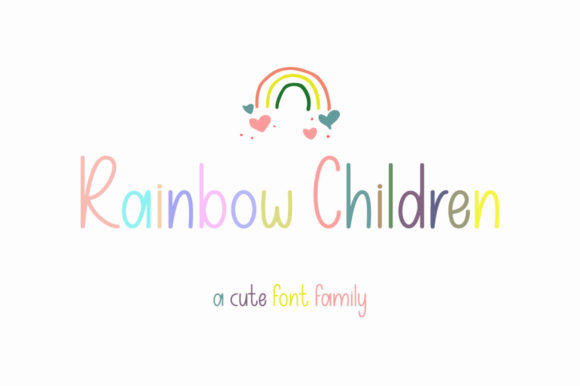
Rainbow Children
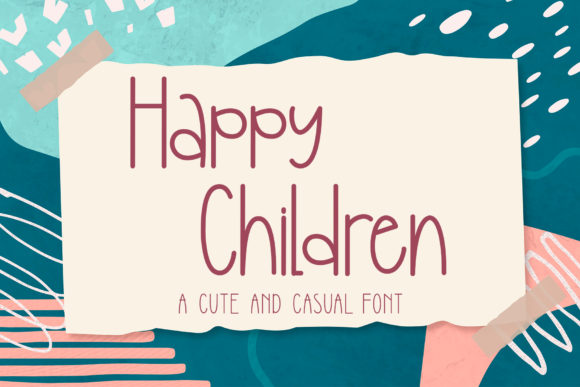
If you’ve ever stared at a blank chalkboard, a half-finished classroom poster, or a digital mockup that feels just a little too polished—and wished for something warmer, more human, more real—then Rainbow Children might be the quiet solution you didn’t know you needed. It’s not flashy. It’s not packed with alternates or ligatures. It’s a cute, simple, handwritten font built from genuine lettering—each character drawn by hand, then carefully digitized to preserve its natural rhythm and slight imperfections.
That authenticity is why Rainbow Children works so well where other fonts fall short: in spaces where warmth matters more than precision. Think of it as the visual equivalent of a teacher kneeling beside a student’s desk to draw a quick rainbow next to their spelling test—or the cozy scrawl on a café chalkboard menu that makes you pause longer than you intended.
Where Rainbow Children Fits Naturally (Not Just “Looks Cute”)
Rainbow Children isn’t meant for legal disclaimers, technical documentation, or dense body text. Its strength lies in moments of connection—short phrases, intentional pauses, visual anchors. That means it shines in places where people stop, look, and feel something before they read.
Educators use it for classroom displays that don’t scream “clip art.” A bulletin board titled “Our Kindness Tree” in Rainbow Children feels inviting—not instructional. A weekly schedule printed on pastel cardstock, handwritten-style but consistent and legible? That’s Rainbow Children doing quiet work: reducing visual overwhelm for young learners while supporting routine and emotional safety.
Small business owners, especially those running boutiques, bakeries, or wellness studios, lean into Rainbow Children for in-store signage that avoids corporate sterility. Imagine a handwritten tag on a handmade soap bar: “Lavender & Oat Milk • Made with slow hands”. The font doesn’t shout—it invites. It signals care, craft, and approachability—qualities customers actively seek out in local, values-driven brands.
Bloggers and content creators use it for quote graphics that actually get saved—not scrolled past. Because Rainbow Children’s gentle unevenness mimics real handwriting, quotes rendered in it feel less like stock content and more like something a thoughtful friend jotted down. Pair it with soft background textures or subtle chalk-dust overlays, and suddenly your Instagram carousel slide stands out—not because it’s louder, but because it feels more held.
Real Situations Where Rainbow Children Makes a Tangible Difference
- A homeschool parent designing a weekly learning tracker for their 7-year-old: Rainbow Children turns a checklist into something joyful. The child recognizes the friendly letterforms—not as “font,” but as “how Mom writes.” That familiarity builds confidence and reduces resistance to routine.
- A freelance graphic designer building a brand identity for a new children’s yoga studio: Rainbow Children becomes the voice behind the logo lockup, workshop handouts, and social bios. It helps position the studio as nurturing and grounded—not performative or overly precious.
- A church volunteer creating Sunday school materials: Instead of defaulting to cartoonish fonts or stiff serifs, they use Rainbow Children for scripture cards and activity instructions. The result feels reverent without being formal—accessible to kids, respectful of meaning.
- A wedding planner designing printable ceremony programs or seating charts: Rainbow Children adds intimacy without sacrificing clarity. Guests notice the thoughtfulness—not the font name—but they feel the care behind every detail.
What to Consider Before Using Rainbow Children
Because it’s designed to mimic authentic handwriting, Rainbow Children has natural limits—and knowing them helps you use it well, not just often.
First: scale matters. It reads beautifully at 24pt and up in print, or 36px+ on screen. At smaller sizes—like captions under photos or footnotes—it starts to lose legibility. That’s not a flaw; it’s by design. Handwriting simply isn’t meant to shrink that far and stay clear.
Second: contrast is your friend. Rainbow Children performs best against light or muted backgrounds—cream, soft gray, pale sage—not busy patterns or dark tones unless you add a subtle white stroke or shadow. Without enough contrast, its delicate strokes disappear.
Third: pairing keeps it grounded. Use it for headlines, quotes, labels, or short calls-to-action—and pair it with a clean, neutral sans serif (think Inter, Lato, or Open Sans) for supporting text. That contrast lets Rainbow Children breathe and do its expressive work, while keeping information easy to scan and understand.
And finally: license awareness. Rainbow Children is typically offered with personal and commercial licenses—but always check the source. If you’re using it on client work, product packaging, or digital templates you plan to sell, confirm the license covers that scope. Most reputable sellers make this clear upfront; when in doubt, reach out.
Why This Font Sticks Around (Beyond Trend)
Trends come and go—script fonts with excessive swirls, ultra-thin minimalist type, retro tech fonts—but Rainbow Children endures because it answers a steady human need: the desire for connection in a world saturated with algorithmic polish.
You don’t choose it to follow a trend. You choose it because your third-grade student smiled when she saw her name spelled in it on her reading chart. Because your Etsy customer messaged to say, *“Your packaging felt like a note from a friend.”* Because your Instagram Story got more replies when you used it for a vulnerable, offhand reflection—not a marketing pitch.
That’s the quiet power of Rainbow Children: it doesn’t ask to be admired. It asks to be trusted—with a child’s milestone, a small business’s first launch, a teacher’s daily ritual, a creator’s honest voice. It’s not about perfection. It’s about presence.
So if your next project needs warmth over wow, sincerity over slickness, or humanity over hype—try Rainbow Children where it counts most: in the small moments that make people pause, recognize themselves, and feel seen.