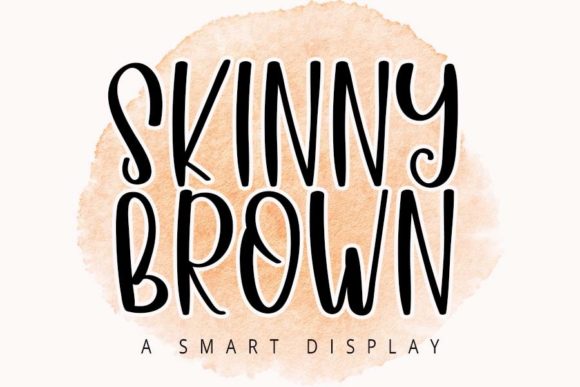
Skinny Brown
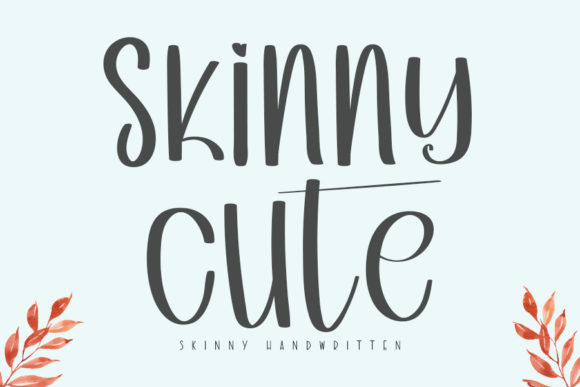
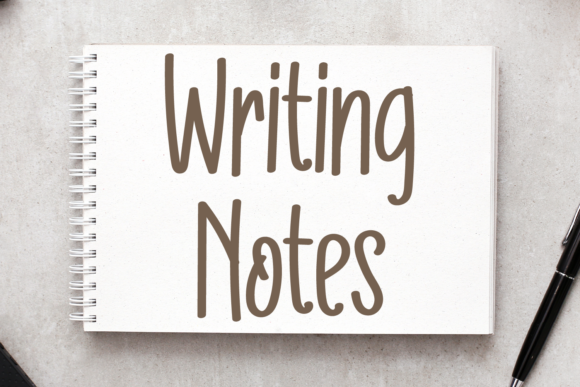
Skinny Brown is a tall, casual, and relaxed handwritten font—designed not to shout, but to settle in comfortably beside your ideas. Its natural rhythm, subtle irregularities, and generous x-height give it warmth without sacrificing legibility. It’s not a display font that demands attention; it’s one that earns trust through consistency and character. That makes it especially useful for professionals and creators who need typography that supports intention—not overrides it.
Where Skinny Brown Fits in Your Workflow
Typography isn’t just about aesthetics—it’s part of how you structure thought, communicate tone, and guide attention. Skinny Brown enters the process early: during concepting, moodboarding, or even rough wireframing. Because it feels human and unhurried, it helps ground abstract ideas in something tactile and approachable. Designers sketch layouts with Skinny Brown before switching to final typefaces. Educators draft slide headers or worksheet titles using it to signal “this is meant to feel inviting, not formal.” Bloggers use it in newsletter subject lines or social post captions where personality matters more than polish.
It also plays well *after* decisions are made. When refining a brand voice guide, Skinny Brown often appears in examples of “friendly yet professional” tone—paired with clean sans-serifs for body text. Small business owners embed it into Canva templates for Instagram Stories or printable workshop handouts because it scales well across devices and prints crisply at small sizes. Its relaxed proportions mean it doesn’t compete with imagery or data—it frames them.
Integration Across Tools and Platforms
Skinny Brown works best when treated as a deliberate choice—not an afterthought. It’s available in standard OTF and TTF formats, so it installs cleanly on macOS, Windows, and Linux. You’ll find it supported in Figma, Adobe Creative Cloud (Photoshop, Illustrator, InDesign), Affinity Suite, and most modern web design tools. For developers, it can be self-hosted or loaded via Google Fonts if a licensed version is available—or embedded via @font-face with fallbacks.
In practice, compatibility means thinking ahead. If you’re building a landing page in Webflow and want to use Skinny Brown for section headlines, test how it renders alongside system fonts like Inter or Helvetica Neue for paragraph text. The contrast between its organic flow and a neutral sans-serif creates visual hierarchy without clutter. Similarly, in Notion or Obsidian, some users apply Skinny Brown via custom CSS snippets for page titles or daily journal headers—making personal knowledge management feel less transactional and more reflective.
Before the Project: Setting Intent
Before opening a design file or drafting copy, ask: What feeling should this evoke? If the answer includes “approachable,” “thoughtful,” or “unhurried,” Skinny Brown is worth considering. It’s rarely the right choice for legal disclaimers or technical documentation—but ideal for welcome messages, course syllabi, creative briefs, or internal team updates where clarity meets empathy.
Preparation also means checking licensing. Skinny Brown is typically offered under a commercial license—so verify usage rights if distributing assets externally (e.g., client deliverables, published ebooks, or SaaS UI). Some versions allow unlimited use; others require per-seat or per-project licensing. Keep a note in your resource library with license terms, file location, and activation method—especially if multiple team members need access.
During Execution: Balancing Personality and Function
Use Skinny Brown intentionally—not everywhere. A common mistake is overloading interfaces with expressive fonts. Instead, apply it where emphasis matters: a headline above a testimonial, the title of a downloadable workbook, or the name of a recurring workshop series. Pair it with a highly legible, neutral typeface for supporting text. This pairing improves scannability while preserving voice.
Spacing matters too. Skinny Brown’s tall lowercase letters respond well to increased line height (1.4–1.6) and generous letter-spacing (+10–20 units) in all-caps settings. Avoid justified alignment—its natural variation in stroke weight and spacing looks uneven when forced into rigid columns. Left-aligned or centered works best, depending on context.
- For presentations: Use Skinny Brown for slide titles only—keep bullet points and speaker notes in a clean sans-serif.
- For print: Print a test page at actual size before final runs—its thin strokes hold up well on coated stock but may soften slightly on uncoated paper.
- For digital forms: Avoid using it for input labels or error messages—stick to system fonts there for accessibility and predictability.
Long-Term Use and Consistency
Consistency builds recognition—and recognition builds trust. If you adopt Skinny Brown for your brand’s visual language, define clear rules: where it appears, at what sizes, and how it pairs. Document those in a simple style guide—even a single-page Notion doc works. Include examples of correct and incorrect usage (e.g., “OK: email header | Not OK: mobile navigation menu”). Share it with contractors, interns, or collaborators so implementation stays aligned without constant oversight.
Over time, you’ll notice patterns in how it performs. It reads faster in short bursts—like call-to-action buttons or podcast episode titles—but slows down comprehension in dense paragraphs. That’s not a flaw; it’s feedback. Let that inform where you place it. Also, revisit usage every 6–12 months. Does it still reflect your current voice? Has your audience shifted? Fonts age quietly—what felt fresh in 2022 might read as dated by 2025. Re-evaluation isn’t failure; it’s maintenance.
Workflow Integration Tips
Start small. Add Skinny Brown to one recurring asset—say, your weekly team update template—and observe how people respond. Is it easier to scan? Does it change the tone of feedback? Then expand gradually: next, apply it to client proposal covers; later, to workshop materials. Each step reinforces muscle memory and reveals edge cases.
Automate where possible. In Figma, create a text style called “Headline / Skinny Brown / H2” with preset size, weight, and spacing. In Adobe apps, save character styles with the same name. These shortcuts reduce decision fatigue and keep output uniform across projects—even when multiple people contribute.
Finally, treat it like a collaborator—not a decoration. Ask: Does this use support the goal? Does it make the message clearer or just prettier? If the answer leans toward “prettier,” pause and reconsider. Typography serves communication first. Skinny Brown excels when it does both—adding warmth without sacrificing function.
Real-World Examples
A freelance educator uses Skinny Brown for course module titles in Teachable—pairing it with Open Sans for lesson text. Students report the interface feeling “less intimidating,” which correlates with higher completion rates in early modules.
A local bakery inserts Skinny Brown into their Square POS receipt headers (“Thanks for stopping by!”) and laminated menu boards. Customers photograph and share those boards organically—the font’s charm translates well in casual phone photos.
An indie publisher applies Skinny Brown to chapter title pages in EPUB files, then switches to Georgia for body text. Readers cite the “handwritten touch” as making long-form nonfiction feel more conversational and grounded.
None of these rely on novelty. They rely on fit—on choosing a tool that aligns with purpose, audience, and execution reality.
Making It Last
Long-term value comes from thoughtful integration—not flashy application. Skinny Brown stays useful because it doesn’t try to be everything. It’s narrow in scope but deep in resonance. Use it where humanity matters more than hierarchy, where tone carries equal weight to content, and where your workflow benefits from a quiet, confident voice.
That requires no special setup—just awareness of where your work lives, who it reaches, and how it’s received. Start there. Let Skinny Brown follow.