Grontfess Brushela: A Handwritten Font That Builds Trust, Not Just Aesthetics
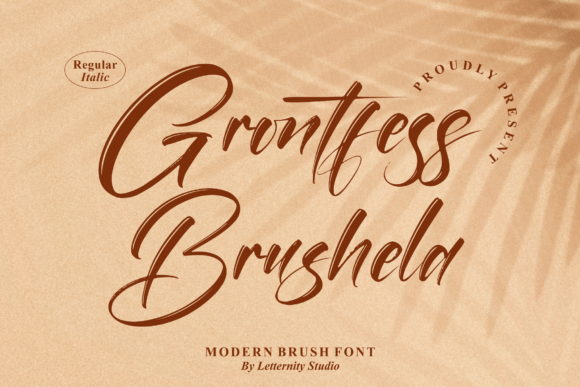
Grontfess Brushela isn’t just another decorative script. It’s a deliberately crafted, beautifully brushed handwritten font designed to carry weight—emotionally, strategically, and functionally. Its organic flow, subtle texture, and confident stroke rhythm make it uniquely suited for contexts where authenticity matters more than perfection. For entrepreneurs launching a boutique brand, educators designing inclusive learning materials, or freelancers crafting client-facing assets, Grontfess Brushela offers more than visual appeal: it signals intentionality, warmth, and human presence.
Why Handwriting Still Carries Strategic Weight in Digital Spaces
In an era saturated with AI-generated visuals and hyper-polished templates, handwriting—especially one as refined as Grontfess Brushela—acts as a quiet differentiator. It doesn’t shout; it leans in. That’s valuable when you’re trying to build rapport with customers who’ve grown skeptical of generic messaging. Research in behavioral design shows that perceived human effort increases trust and recall—particularly in high-intent moments like purchase decisions, email sign-ups, or workshop registrations. Grontfess Brushela leverages that principle without requiring actual handwriting. Its brush-like pressure variation and natural entry/exit strokes mimic the cognitive and physical investment of a person choosing their words carefully.
Where Grontfess Brushela Delivers Measurable Value
Its strength lies not in universality, but in precision. Grontfess Brushela excels where tone, nuance, and emotional resonance directly influence outcomes:
- Branding for values-driven businesses: A sustainable skincare label using Grontfess Brushela on its jar sticker communicates care and craft—without needing to explain it. The font quietly reinforces the brand’s commitment to authenticity and tactile quality.
- Personalized customer touchpoints: Email subject lines, limited-edition product tags, or handwritten-style thank-you notes embedded in digital order confirmations gain psychological warmth when set in Grontfess Brushela—increasing open rates and repeat engagement.
- Educational and therapeutic materials: Teachers designing SEL (social-emotional learning) handouts or therapists creating reflection worksheets find Grontfess Brushela lowers perceived formality, inviting participation rather than compliance.
- Craft-based small business operations: From wedding invitation suites to artisanal food labels, Grontfess Brushela supports consistency across physical and digital touchpoints—helping small teams maintain brand voice without hiring a designer for every iteration.
Using Grontfess Brushela With Purpose—Not Decoration
Strategic use starts with asking: What outcome do I want this text to support? If the answer is “it looks nice,” pause. Grontfess Brushela earns its place only when it serves a functional goal—clarity, connection, distinction, or emotional alignment. Consider these practical filters before applying it:
- Is legibility preserved at intended size and medium? Grontfess Brushela performs best at 18pt and above in print, and 24px+ on screens. Avoid tight line spacing or low-contrast color combinations (e.g., light gray on white). Test readability with real users—not just your own eyes.
- Does it align with audience expectations—not just your taste? A fintech dashboard using Grontfess Brushela for data labels would undermine credibility. But a financial coach’s quarterly reflection journal? That’s a strong fit. Match the font’s warmth to the user’s mental model of the interaction.
- Is it supporting hierarchy—or competing with it? Grontfess Brushela should rarely carry body copy. Use it for primary headlines, call-to-action buttons, signature lines, or short quotes. Pair it with a clean, neutral sans-serif (like Inter or Open Sans) for supporting text. This contrast creates visual breathing room and directs attention intentionally.
Risks of Misalignment—And How to Avoid Them
The most common misstep isn’t technical—it’s strategic drift. Using Grontfess Brushela everywhere dilutes its impact and risks signaling inconsistency. A brand that uses it for a blog title, a pricing table, and error messages confuses users about what matters—and why. Worse, overuse can unintentionally suggest informality where authority is needed (e.g., legal disclaimers, safety instructions, or investor decks).
Another risk lies in context blindness. Grontfess Brushela assumes a baseline of cultural familiarity with expressive, non-uniform handwriting. In multilingual or global-facing applications, test whether its rhythm reads as warm—or ambiguous—to diverse audiences. Some scripts may interpret brushstroke variation as instability rather than artistry.
To mitigate these, treat Grontfess Brushela like a strategic tool—not a stylistic default. Document usage rules in your brand guidelines: specify approved sizes, colors, pairings, and exclusion zones (e.g., “Never used for regulatory text or navigation labels”). Revisit those rules quarterly as your audience or goals evolve.
Practical Integration Tips for Real Workflows
You don’t need design expertise to use Grontfess Brushela effectively. Here’s how professionals integrate it without slowing down:
- For Canva or Adobe Express users: Save Grontfess Brushela as a branded template preset—pre-configured with optimal tracking, line height, and fallback fonts. Apply it in one click to headlines, quotes, or CTA buttons across social posts, presentations, and flyers.
- For web developers: Load Grontfess Brushela via a reliable font host (e.g., Google Fonts if available, or self-hosted with proper licensing). Define CSS font stacks with clear fallbacks:
font-family: 'Grontfess Brushela', 'Segoe UI', system-ui, sans-serif;. Limit its use to,, orelements—not paragraph text. - For print designers: Export Grontfess Brushela as outlines only for final PDFs—avoid embedding live fonts in production files unless your printer confirms full compatibility. Always proof on physical paper; screen rendering often softens its brush texture.
- For educators and creators: Use Grontfess Brushela in editable Canva or PowerPoint templates—but keep source files organized by use case (e.g., “Grontfess-Workshop-Header”, “Grontfess-Feedback-Quote”). Consistency compounds over time.
Long-Term Positioning: Beyond Trend, Toward Identity
Fonts shape perception over months and years—not minutes. Grontfess Brushela gains strategic value the longer it’s used with discipline. When customers begin to associate its rhythm with your brand’s voice—its sincerity, its attention to detail, its human-centered approach—it stops being typography and becomes part of your identity infrastructure. That’s not achieved through volume, but through repetition in high-meaning moments: the first welcome email, the certificate of completion, the handwritten-style note tucked into a shipped order.
This requires patience. Don’t expect immediate lift from swapping fonts. Instead, track downstream indicators: Do customers quote your tagline more often in reviews? Does engagement increase on assets using Grontfess Brushela versus standard fonts? Do team members report feeling more aligned with brand voice when using pre-approved templates?
That’s how Grontfess Brushela moves beyond decoration—and becomes a quiet, consistent contributor to clarity, confidence, and connection.