Dancinglove: Elegant Handwritten Font for Personal Touch
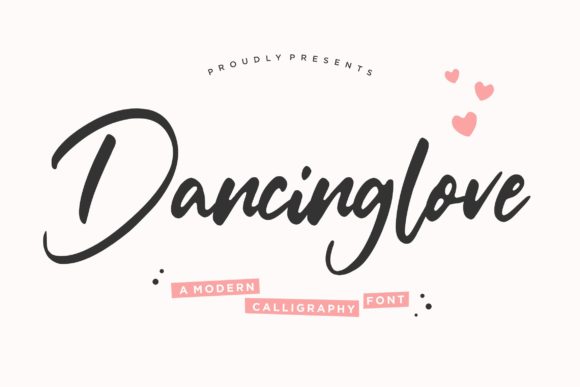
When your design needs warmth, authenticity, and quiet sophistication—Dancinglove delivers. It’s not just another script font. Dancinglove is a carefully crafted handwritten typeface that balances fluidity with legibility, elegance with approachability. Its subtle variations in stroke weight, natural entry and exit flourishes, and gentle rhythm mimic the nuance of real pen-on-paper writing—without sacrificing clarity at small sizes or on digital screens.
Why Dancinglove Stands Out in a Sea of Script Fonts
Many handwritten fonts fall into one of two traps: either they’re overly ornate (hard to read, difficult to pair), or too casual (lacking authority or polish). Dancinglove avoids both. Its lowercase “a,” “g,” and “y” feature open, friendly shapes; its capitals carry presence without shouting. The spacing is thoughtfully adjusted—not tight enough to blur, not loose enough to feel disconnected. That balance makes Dancinglove unusually versatile: it works as a headline *and* as body text in short-form contexts like envelope addressing or social media graphics.
Real Impact in Real Projects
Wedding professionals consistently tell us that clients respond more emotionally to stationery where the typography feels intentional—not templated. A wedding invitation set using Dancinglove conveys care before the guest even reads the first word. The font’s soft curves echo the tenderness of the occasion, while its clean structure ensures RSVP details remain effortlessly scannable. Similarly, thank-you cards gain sincerity when typed in Dancinglove—readers subconsciously register the effort behind the choice, reinforcing gratitude as genuine rather than transactional.
Small business owners building brand identity also find value here. A local bakery, artisan candle maker, or wellness coach can use Dancinglove in their logo or website hero text to signal warmth and human-centered values—without leaning into clichéd “rustic” tropes. Because Dancinglove isn’t tied to a single aesthetic era (no Victorian swirls, no millennial “doodle” randomness), it adapts across industries: a boutique law firm might use it sparingly for a tagline; an educator could apply it to workshop handouts to soften formal content and increase engagement.
Where Dancinglove Saves Time—and Why That Matters
Creatives often spend disproportionate time searching for “the right script.” They test five fonts, adjust kerning manually, then realize the baseline alignment is off—or the ampersand looks jarringly different from the rest. Dancinglove includes extensive language support (including extended Latin characters), consistent OpenType features (like contextual alternates and ligatures), and well-hinted web versions. That means fewer manual fixes, less back-and-forth between designer and client over “Does this ‘s’ look weird?”, and faster iteration cycles.
For non-designers—bloggers adding custom headers, teachers preparing classroom materials, freelancers drafting proposals—Dancinglove lowers the barrier to polished output. You don’t need advanced typography knowledge to get good results. Its default settings work well out of the box. Pair it with a neutral sans-serif (like Inter or Lato) for contrast, and you’ve got a reliable, professional hierarchy that communicates clarity *and* personality.
Thoughtful Fit: When Dancinglove Shines—and When to Pause
Dancinglove excels in contexts where emotional resonance matters more than sheer information density. It’s ideal for short-form, high-intent communication: event names, quotes, product names, signatures, call-to-action buttons (“Join Us,” “Reserve Your Spot”), or brand slogans. It supports storytelling—not data tables or legal disclaimers.
That said, it’s not meant for long paragraphs, multi-page reports, or interfaces requiring rapid scanning. If your project centers on accessibility compliance (e.g., WCAG AA for body text), consider reserving Dancinglove for headings and accents only, and pairing it with a highly legible, tested sans-serif for正文. Also, while Dancinglove includes stylistic sets, it doesn’t offer multiple weights—so if your design system relies on bold/medium/light distinctions for visual hierarchy, you’ll need to supplement with a compatible companion font.
Who Benefits Most—and How They Use It
Wedding planners and stationers use Dancinglove to unify print and digital touchpoints—from Save-the-Dates to Instagram story templates—creating cohesive, memorable experiences. One planner shared how switching from a generic script to Dancinglove reduced client revision requests by nearly 40%, because the font’s consistency across formats minimized confusion about tone.
Educators and course creators apply it to certificates, workshop slides, or welcome emails. A yoga instructor reported higher open rates on her monthly newsletter after replacing a stiff serif headline with Dancinglove—readers told her it “felt like a personal note, not a broadcast.”
Freelancers and solopreneurs rely on Dancinglove to add distinction to proposals and pitch decks. In competitive fields like copywriting or UX consulting, subtle typographic warmth helps position expertise as both capable *and* collaborative—not distant or overly corporate.
Nonprofit communicators find it effective for donor-facing materials. A community garden initiative used Dancinglove in their annual impact report cover and matching thank-you postcards. Donors mentioned the “handmade feeling” made them feel personally acknowledged—not like a line item.
A Note on Licensing and Practical Use
Dancinglove is available under standard desktop, web, and app licenses—with clear terms for commercial use. If you’re embedding it in client projects (e.g., designing a logo for a small business), confirm whether your license permits redistribution. For most users—whether creating for personal use, internal teams, or direct client delivery—the standard license covers common workflows. Always check the official source for current licensing details, especially for SaaS platforms or large-scale deployments.
Importantly, Dancinglove performs well across platforms. Its web-optimized version renders cleanly in modern browsers, and its variable-friendly structure allows smooth scaling without pixelation. Designers using Figma, Adobe Creative Cloud, or Affinity Suite report stable performance and intuitive character access—no missing glyphs or rendering hiccups during export.
Final Thought: Typography as Quiet Advocacy
In a world saturated with algorithm-driven templates and AI-generated visuals, choosing a font like Dancinglove is a small but meaningful act of intention. It signals that you value craft, care about how words land emotionally, and understand that design isn’t just decoration—it’s part of the message itself. Whether you're sealing an envelope, launching a new brand, or sending a heartfelt note, Dancinglove helps ensure the tone matches the intent. Not flashy. Not fussy. Just quietly, unmistakably human.