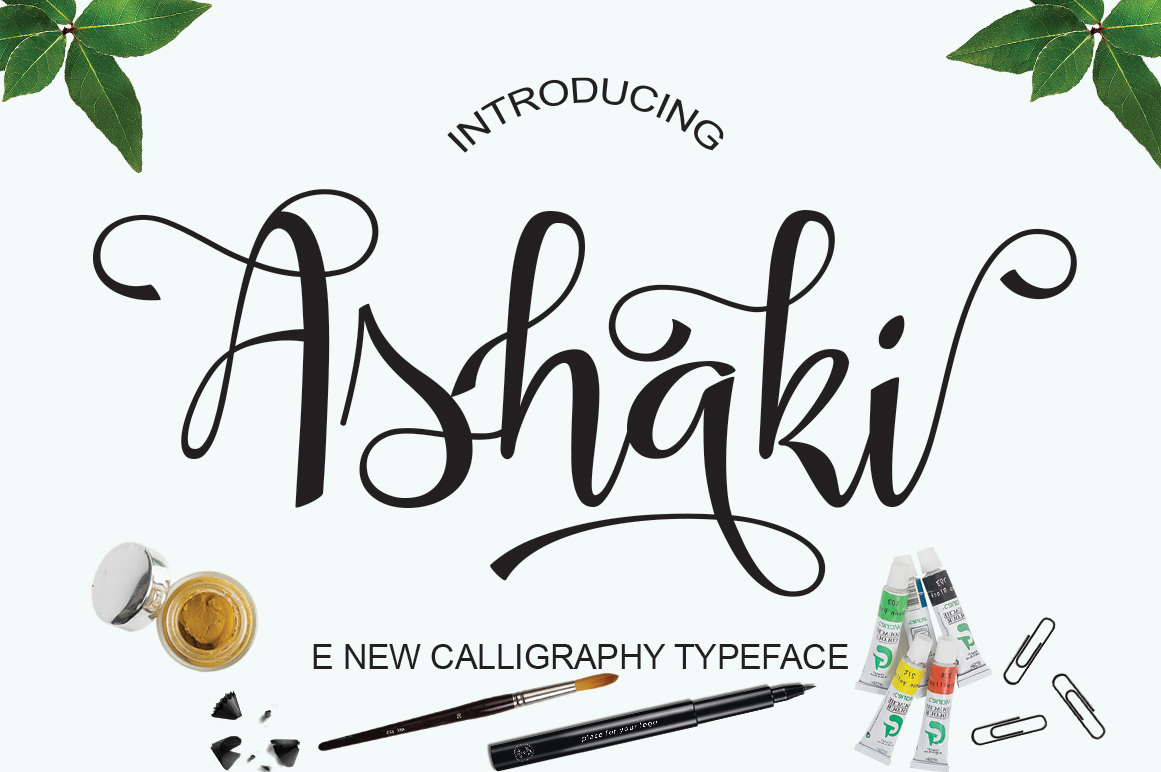
Asyaki: A Stunning Handwritten Font That Brings Warmth and Authenticity to Your Design Projects
Asyaki is more than just a font—it’s a thoughtful, expressive tool crafted by Naqsya.Co to bridge the gap between digital precision and human warmth. Designed with organic flow, subtle variation, and intentional imperfection, Asyaki captures the charm of genuine handwriting without sacrificing readability or versatility. Whether you're a small business owner updating your brand identity, a designer refining a client’s website, or an educator creating engaging learning materials, Asyaki offers a rare balance: personality with professionalism, artistry with practicality.
Why People Seek Handwritten Fonts—And Why Many Fall Short
Many adults turn to handwritten fonts hoping to evoke trust, approachability, or creativity—especially in contexts where cold, sterile typefaces feel out of place. Think of a boutique bakery’s packaging, a therapist’s website welcome message, or a wedding invitation suite. Yet, not all handwritten fonts deliver. Some look overly scripted or robotic; others lack sufficient character sets, fail to render well on screens, or clash with body text in real-world layouts. Users often end up frustrated after investing time only to discover limited language support, inconsistent spacing, or poor OpenType features that hinder workflow.
That’s where Asyaki stands apart. It was built with intention—not just aesthetic appeal, but real-world usability in mind. Its design reflects natural pen pressure, slight baseline shifts, and graceful joins that mimic how people actually write. More importantly, it ships with full Latin character coverage, standard ligatures, and alternate glyphs, making it adaptable across platforms and purposes without requiring workarounds.
How Asyaki Solves Real Design Challenges
Let’s consider three common scenarios—and how Asyaki helps:
- Small business branding: A local pottery studio wants its website and product tags to feel personal and handcrafted—not generic or mass-produced. Asyaki’s gentle curves and soft terminals lend sincerity without sacrificing legibility at smaller sizes. Paired with a clean sans-serif for body copy, it creates hierarchy and warmth instantly.
- Educational content creation: Teachers and course creators often need fonts that feel inviting yet remain accessible to learners of all ages. Asyaki’s open letterforms and moderate contrast improve scanability—especially for younger readers or those with mild visual processing preferences—while still retaining expressive flair in headings and callouts.
- Digital storytelling and newsletters: Writers and newsletter curators use Asyaki to add voice and intimacy to email subject lines, section headers, or quote highlights. Unlike many decorative fonts, Asyaki renders crisply on mobile devices and email clients, ensuring tone isn’t lost in translation across devices.
Practical Tips for Getting the Most From Asyaki
Using Asyaki effectively isn’t about applying it everywhere—it’s about strategic placement. Here’s what works well in practice:
- Use it for emphasis, not exposition: Reserve Asyaki for headlines, pull quotes, logos, or short labels. Avoid long paragraphs—it’s designed to complement, not replace, highly legible body fonts.
- Test contrast and sizing early: While Asyaki has excellent readability for a script font, always check how it performs against your background color (especially light-on-dark). At 24px or larger, its details shine; below 18px, some fine strokes may soften on lower-resolution screens.
- Leverage stylistic alternates thoughtfully: Asyaki includes optional swashes and alternate characters. Use them sparingly—for instance, to give a logo a distinctive “Q” or “A”—but avoid overloading every word. Subtlety reinforces authenticity.
- Pair intentionally: It pairs beautifully with neutral, humanist sans-serifs like Inter, Poppins, or Lato—or even warm serifs like Merriweather or Cormorant Garamond. The key is contrast: let Asyaki bring rhythm and voice, while the secondary font provides structure and clarity.
Different Users, Different Approaches
How you use Asyaki depends on your goals, tools, and technical comfort:
- Non-designers (e.g., solopreneurs, educators): Start simple—use Asyaki in Canva or Google Slides for social media banners or printable handouts. Upload the OTF file to your platform, select it as a heading font, and stick to title case for best results. No need to tweak kerning or enable ligatures unless you’re comfortable doing so.
- Web designers and developers: Embed Asyaki via
@font-faceor a trusted font host. Usefont-display: swapto ensure fast loading. Apply it selectively using CSS classes like.hero-titleor.signature-cta, and always include a system font fallback (e.g.,"Segoe UI", system-ui, sans-serif) for graceful degradation. - Brand strategists and marketers: Consider Asyaki as part of your visual tone-of-voice system—not just typography, but emotional signaling. Does it align with your brand’s promise of care, craftsmanship, or calm? Test it alongside your color palette and imagery before finalizing guidelines.
What to Keep in Mind Before You Commit
Asyaki is licensed for both personal and commercial use through Naqsya.Co—but always verify the license scope for your specific needs (e.g., app embedding, SaaS platforms, or large-scale merchandise). It currently supports Latin-based languages and does not include extended Cyrillic, Arabic, or CJK character sets—so if multilingual support is essential for your audience, plan accordingly or pair it with a compatible global font.
Also remember: fonts alone don’t build trust—they support it. Asyaki enhances sincerity, but consistency, clarity, and empathy in your messaging do the heavy lifting. Use it as one thoughtful layer in a broader communication strategy—not a shortcut to authenticity.
A Final Thought: Choose Tools That Reflect Your Intent
In a world saturated with templated designs and algorithm-driven aesthetics, choosing a font like Asyaki signals intentionality. It says you value nuance over noise, connection over convenience, and craft over compromise. Whether you’re launching a new service, redesigning a portfolio, or simply refreshing how you introduce yourself online, Asyaki invites you to slow down, lean into warmth, and express meaning—not just information.
If you’re ready to explore it, visit Naqsya.Co’s Asyaki page to preview samples, download trials, and review licensing options. And when you do start using it, pay attention—not just to how it looks, but how it feels to work with. Because the most useful tools don’t just perform well. They resonate.