Raccoon Font: The Chalkboard-Inspired Handwritten Typeface That Brings Warmth and Authenticity to Your Designs
Have you ever seen a beautifully handwritten quote on a chalkboard in a cozy café, a classroom poster that feels inviting rather than clinical, or a children’s learning worksheet that looks like it was made by a caring teacher—not an algorithm? Chances are, the font behind that warmth was something like Raccoon: a cute, simple, lettered handwritten typeface designed to mimic real chalk-on-blackboard writing. More than just a visual trend, Raccoon is a thoughtful design tool—crafted for authenticity, accessibility, and emotional resonance.
What Is the Raccoon Font—and Why Does It Stand Out?
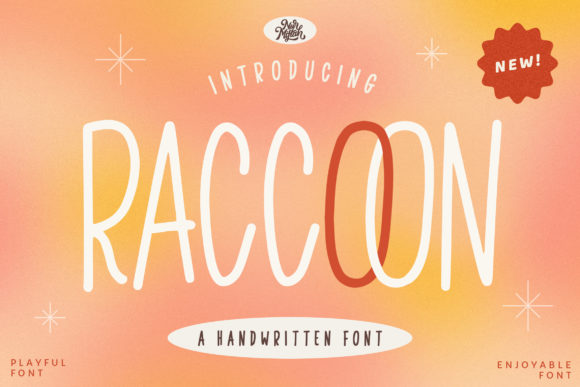
Raccoon is a free-to-use (and often open-licensed) handwritten font that captures the organic imperfections of natural pen or chalk strokes. Unlike overly polished script fonts or rigid sans-serifs, Raccoon features slight variations in stroke weight, subtle wobbles, and gentle inconsistencies—hallmarks of genuine human handwriting. These details aren’t flaws; they’re intentional cues that signal approachability, sincerity, and care.
Its name evokes playfulness and curiosity—qualities that align perfectly with its visual personality. But don’t mistake “cute” for “childish.” Raccoon strikes a balanced tone: friendly without being cutesy, legible without being sterile, and expressive without sacrificing readability—even at smaller sizes.
Purpose Built for Real-World Use
Raccoon wasn’t designed for headlines alone. Its true strength lies in functional warmth. Educators use it for classroom posters, flashcards, and student handouts because it feels personal—not corporate. Small business owners choose it for chalkboard-style menus, boutique signage, and social media graphics that reflect handmade values. Designers integrate it into branding systems for wellness studios, preschools, craft supply shops, and community centers where trust and connection matter more than slick perfection.
Unlike many decorative fonts that sacrifice legibility for flair, Raccoon maintains clear letterforms—especially important for early readers or learners with dyslexia-friendly preferences. Its open counters (the enclosed spaces inside letters like a, e, or o) and generous spacing support quick recognition, making it unexpectedly practical for teaching materials.
Where Raccoon Fits Into Modern Life—and Why It Matters
In an age saturated with AI-generated content, algorithmically optimized feeds, and hyper-polished digital interfaces, authenticity has become a rare currency. People increasingly gravitate toward visuals that feel human-made—whether it’s a hand-drawn Instagram story, a scanned notebook page in a presentation, or a custom-branded worksheet for remote learning. Raccoon taps directly into this cultural shift.
- Educational Settings: Teachers report higher student engagement when lesson materials use warm, familiar typography. A multiplication chart in Raccoon feels less intimidating than one in bold Helvetica—it subtly signals, “This is for you, not just for assessment.”
- Small Business Branding: Cafés, bookshops, and local makers use Raccoon to reinforce their commitment to craftsmanship and community. A menu written in Raccoon doesn’t shout “corporate chain”—it whispers “we made this ourselves.”
- Digital Creativity: Canva users, educators on Google Slides, and Notion organizers rely on Raccoon to add tactile charm to otherwise flat digital spaces—bridging the gap between screen and scribble.
Common Misconceptions About Handwritten Fonts Like Raccoon
It’s easy to assume all handwritten fonts are interchangeable—or that they’re only suitable for birthday invitations or nursery decor. That’s not accurate. Raccoon differs meaningfully from other script fonts:
- Not a calligraphy font: Raccoon lacks dramatic flourishes and connected lettering. It’s lettered, not scripted—meaning each character is drawn individually, like writing on a chalkboard. This improves clarity and reduces visual clutter.
- Not just for kids: While beloved in early childhood education, Raccoon works equally well in adult-focused contexts—think mindfulness journal prompts, workshop handouts, or nonprofit campaign materials that prioritize empathy over authority.
- Not inherently unprofessional: When paired thoughtfully (e.g., Raccoon headlines with a clean sans-serif body text), it conveys creativity *and* competence—ideal for fields like education consulting, therapeutic practice, or sustainable design.
How to Use Raccoon Effectively—Tips From Design and Education Experts
Like any powerful tool, Raccoon shines brightest when used intentionally. Here’s how professionals maximize its impact:
- Pair it wisely: Combine Raccoon with highly legible, neutral fonts like Inter, Open Sans, or Lato for body text. This contrast creates hierarchy while preserving warmth.
- Respect spacing: Because of its natural rhythm, avoid tight tracking or excessive line height compression. Let Raccoon breathe—especially in multi-line quotes or lists.
- Use color thoughtfully: On dark backgrounds (like true chalkboards), stick to matte white or soft cream. For light backgrounds, try muted chalky tones—dusty rose, sage green, or slate gray—to preserve its tactile illusion.
- Test for accessibility: While Raccoon is highly readable, always verify contrast ratios (minimum 4.5:1 for normal text) and avoid using it exclusively for critical instructions or legal disclaimers.
Raccoon in Action: Real Examples You Can Learn From
Consider these everyday applications—each grounded in real user needs:
- A Montessori teacher prints weekly “I Can” statements in Raccoon—phrased as affirmations (“I can tie my shoes”)—to reinforce autonomy and self-confidence in young learners.
- A mental health counselor designs reflection worksheets with Raccoon headers (“What felt joyful today?”) to soften clinical language and invite openness.
- A local bakery updates its seasonal chalkboard sign using Raccoon via a digital projector—blending analog charm with modern efficiency.
- An online course creator uses Raccoon for section titles in PDF workbooks, helping students mentally “place” content in a friendly, non-intimidating context.
Why Choosing Raccoon Is More Than a Design Decision
Selecting a font may seem like a small choice—but typography shapes perception at a subconscious level. Raccoon invites pause. It slows down scrolling eyes. It signals that what follows was made with attention—not automation. In education, that translates to increased comprehension and retention. In business, it builds trust before a single word is read. In creative work, it honors the value of human touch in a digital world.
Importantly, Raccoon supports inclusivity—not through gimmicks, but through intention. Its even rhythm and uncluttered forms reduce cognitive load. Its warmth lowers psychological barriers—especially for learners who associate traditional academic fonts with stress or exclusion. And because it’s freely available and widely compatible (OTF, TTF, webfont-ready), it removes cost and technical hurdles for teachers, nonprofits, and independent creators.
Getting Started With Raccoon—No Design Degree Required
You don’t need Adobe Illustrator or years of typography training to benefit from Raccoon. It works seamlessly in:
- Google Docs and Slides (upload as a custom font)
- Canva (install locally or use via Canva’s font library if available)
- Microsoft PowerPoint and Word (install .ttf file system-wide)
- Notion (via custom CSS snippets or embedded image headings)
- Web projects (using
@font-faceor Google Fonts alternatives)
Start small: replace one heading in your next classroom slide, redesign a single social media post, or reformat a weekly newsletter header. Notice how the tone shifts—not dramatically, but meaningfully.
Raccoon isn’t about nostalgia for chalk dust or retro aesthetics. It’s about choosing humanity—deliberately, consistently, and beautifully—in every piece of communication we create. Whether you're guiding a child through phonics, launching a values-driven brand, or simply wanting your digital notes to feel more like a conversation than a command—Raccoon offers a quiet, confident way to say: This was made with you in mind.