Bellagio: A Handwritten Script Font That Feels Human—Not Hyped
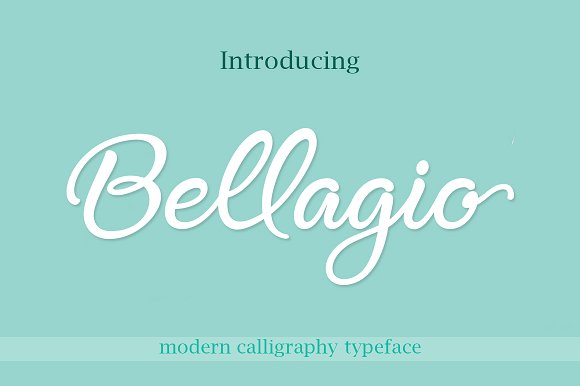
If you’ve ever spent 20 minutes scrolling through font libraries searching for something that looks like it was written by a person—not an algorithm—you’ve probably stumbled across Bellagio. It’s not just another “handwritten” font with stiff loops and repetitive rhythm. Bellagio is a modern handwritten script font created by Byuly Ayika, and what sets it apart isn’t just its elegance—it’s how naturally it breathes on the page.
Where Bellagio Fits in Real Creative Work
Think of Bellagio as the quiet collaborator in your design toolkit—not the loudest voice, but the one people actually pause to read. It’s especially effective when authenticity matters more than perfection. Wedding invitations? Yes—but not just because it’s “pretty.” Because guests subconsciously sense warmth in the letterforms: subtle variations in stroke weight, slight irregularities in baseline alignment, and letters that connect like real handwriting—not robotic cursive.
Small business owners use Bellagio for product labels on artisanal goods—think small-batch honey, ceramic mugs, or handmade soap. The font doesn’t shout “luxury” with gold foil and serif drama. Instead, it whispers “made with care,” aligning perfectly with brands that value craft over gloss.
Designers Who Reach for Bellagio (and Why)
Graphic designers working with lifestyle, wellness, or creative education clients often choose Bellagio when they need to soften digital interfaces. A meditation app’s onboarding screen, for example, might use Bellagio for short motivational phrases (“Breathe in. Begin again.”) alongside clean sans-serif body text. The contrast feels intentional—not jarring—and invites emotional resonance without sacrificing readability.
Branding designers appreciate that Bellagio includes extensive OpenType features: stylistic alternates, ligatures, swashes, and contextual substitutions. That means you’re not stuck with one version of the lowercase “a” or “g.” You can mix and match to avoid repetition—critical when setting longer quotes or social media captions where visual rhythm keeps attention.
What Makes Bellagio Practical—Not Just Pretty
Unlike many script fonts that collapse at smaller sizes or lose legibility in all-caps settings, Bellagio holds up well from 14pt body text to 60pt headlines. Its x-height is generous, and spacing between characters is thoughtfully tuned—not too tight (which causes crowding), not too loose (which breaks flow). That practicality makes it viable for things like email headers, Instagram story text overlays, or even printed workshop handouts where clarity and charm must coexist.
Photographers and illustrators use Bellagio to caption personal projects—say, a photo series documenting daily life in Lisbon or sketches from a travel journal. Because it avoids the overly decorative or calligraphic tropes, it complements imagery instead of competing with it. There’s no visual shouting. Just quiet confidence.
Industries and Use Cases That Benefit Most
- Education & Coaching: Coursework handouts, printable reflection worksheets, or welcome emails from mindfulness coaches—Bellagio adds approachability without infantilizing the content.
- Food & Hospitality: Menus for neighborhood cafés, reservation confirmations, or seasonal tasting notes. It conveys personality while remaining easy to scan.
- Creative Agencies: Client presentations where brand mood boards include typography samples—Bellagio helps convey “human-centered” before a single word is spoken.
- Print-on-Demand & Etsy Sellers: Those creating greeting cards, wall art prints, or custom stationery find Bellagio versatile across formats—digital mockups translate cleanly to physical print, thanks to its consistent ink traps and balanced contrast.
Things to Keep in Mind Before You Use Bellagio
It’s not a universal replacement for every script need. Bellagio shines in contexts where tone is warm, thoughtful, or gently expressive—but it won’t suit high-energy tech startups launching AI tools or law firms drafting formal contracts. Its strength is intimacy, not authority or urgency.
Also worth noting: while Bellagio supports multilingual Latin-based languages (including accented characters for French, Spanish, Portuguese, and German), it doesn’t include Cyrillic, Greek, or extended Arabic support. If your project targets global audiences beyond Western Europe and the Americas, double-check language coverage before committing to full-brand rollout.
And although it works beautifully in design apps like Adobe Illustrator or Figma, Bellagio is a desktop font—not web-optimized out of the box. To use it reliably on websites, you’ll need to convert and serve it via @font-face with proper fallbacks, or license a web version if available. Don’t assume it’ll render consistently in Gmail or older email clients.
How Bellagio Compares to Other Handwritten Fonts
You’ll notice Bellagio avoids two common pitfalls: first, the “too bouncy” effect—where exaggerated ascenders and descenders make text feel unstable on the line. Second, the “too uniform” trap—where every “t” or “e” looks identical, killing rhythm and visual interest. Instead, Bellagio balances variation with consistency. Letters connect smoothly but not automatically; some words have optional entry/exit swashes, others don’t—giving you control, not chaos.
Compared to fonts like Great Vibes or Dancing Script, Bellagio feels less ornamental and more grounded. It’s not trying to be calligraphy—it’s trying to be handwriting with intention. That distinction matters when your goal is connection, not decoration.
Real Moments Where Bellagio Made the Difference
A freelance copywriter used Bellagio for a client’s “Welcome Kit” PDF—sent to new coaching clients before their first session. Feedback? “It felt like you wrote this just for me.” Not because of the words alone, but because the typeface invited trust before the first sentence was read.
A boutique hotel in Asheville chose Bellagio for room amenity cards—printed on recycled cotton paper. Guests photographed them and shared them online, not because the info was surprising, but because the presentation felt personal, unhurried, and quietly luxurious.
Even in motion: animators have used Bellagio in short-form video intros for podcast episodes—typing effects that mimic ink flowing across paper. Because the letterforms are built with natural entry and exit strokes, the animation feels organic, not mechanical.
Final Thought—Use Bellagio Like a Conversation Starter
You don’t need to overthink Bellagio. You don’t need to master every OpenType feature on day one. Start simple: try it for a headline paired with a neutral sans-serif. See how it changes the temperature of the layout. Notice where readers linger—or where they skim past. That feedback is more valuable than any spec sheet.
Bellagio works best when treated like a voice—not a prop. It’s the kind of font that reminds us that behind every brand, product, or message, there’s a person choosing how to show up. And sometimes, the most powerful choice is simply to write like yourself.