Disney Channel: A Handwritten Font That Feels Like a Smile
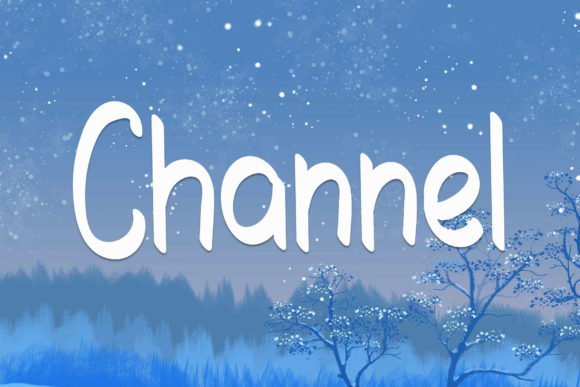
Disney Channel isn’t a TV network in this context—it’s a charming, hand-drawn typeface designed to bring warmth, approachability, and personality to digital and print projects. With its gentle curves, uneven baseline, and playful irregularities, Disney Channel evokes the spontaneity of pen-on-paper sketching—ideal for branding that values authenticity over polish. It’s especially loved by educators crafting classroom materials, small business owners designing friendly shop signage, bloggers adding visual charm to newsletters, and freelancers building cohesive brand identities for lifestyle or wellness clients.
Why People Reach for Disney Channel (and Why They Sometimes Regret It)
Designers often choose Disney Channel because it promises instant friendliness—soft edges, open letterforms, and a relaxed rhythm that reads as “cute,” “casual,” and “inviting.” That’s genuine value—when used intentionally. But too often, it’s selected without considering context, audience, or technical constraints. The result? A logo that feels out of place on a law firm’s website, a presentation slide where readability drops at 14pt, or social media graphics that pixelate on mobile devices.
Mistake #1: Assuming “Cute” Fits Every Audience
Disney Channel’s voice is inherently youthful and lighthearted. That makes it powerful for children’s book illustrations, baby shower invites, or indie bakery menus—but risky for financial dashboards, medical brochures, or B2B SaaS landing pages. One freelance educator chose it for her online course on data literacy, hoping to soften the subject. Students praised her content but struggled to scan headings during quick reviews—especially on tablets. The font’s low contrast and variable stroke width reduced legibility under time pressure or lower-resolution screens.
Better approach: Ask *who needs to read this—and when?* If clarity, speed, or authority matters more than whimsy, pair Disney Channel with a clean sans-serif for body text or use it only for decorative accents (logos, section dividers, callout quotes). Never let personality override function.
Mistake #2: Overlooking Technical Limits
Disney Channel was crafted for display use—not extended reading. It lacks OpenType features like stylistic alternates, small caps, or robust hinting for screen rendering. On Windows systems or older browsers, letters may appear slightly blurry or inconsistently spaced. Worse, many free downloads circulating online are incomplete (missing bold weights or punctuation), poorly encoded (causing missing symbols or garbled characters), or even embedded with unwanted tracking scripts.
What to check before downloading or buying:
- Does the file include a full character set (Latin + common diacritics, numerals, basic punctuation)?
- Is it licensed for your use case—web embedding, commercial products, app UI, or merchandise?
- Does the foundry provide test files or a live preview showing how it renders across devices?
- Are there documented compatibility notes for platforms like Canva, Figma, or WordPress?
A small boutique owner once used a pirated version on her Shopify store. When customers tried to copy product names from her site, the text pasted as gibberish—damaging trust and hurting SEO through poor user engagement signals.
Mistake #3: Ignoring Hierarchy and Pairing
Because Disney Channel feels so distinctive, it’s tempting to use it everywhere—headings, subheads, buttons, captions. But without contrast, nothing stands out. Visual hierarchy collapses. One blogger applied it uniformly across her food blog: recipe titles, ingredient lists, and footer links all shared the same weight and style. Readers reported skimming past key steps and missing prep times entirely.
Practical pairing tip: Let Disney Channel shine in one role—like a logo mark or headline—and anchor everything else with a neutral, highly legible companion. Try Inter, Manrope, or IBM Plex Sans for body copy. Keep line height generous (1.6+), limit paragraph width (60–75 characters), and never shrink Disney Channel below 24pt for headings or 18pt for short labels.
Mistake #4: Confusing “Handwritten” With “Unprofessional”
Some creators avoid Disney Channel entirely, assuming any script or casual font signals amateurism. That’s outdated thinking. What reads as unpolished isn’t the font itself—it’s inconsistent spacing, poor kerning, mismatched weights, or inappropriate sizing. A well-executed design using Disney Channel can feel intentional, human-centered, and memorable—exactly what many modern brands strive for.
Consider how a pediatric therapist uses it: only in her practice’s welcome banner and session handouts, always at 32pt with ample padding, paired with crisp 14pt Roboto for instructions. Parents describe it as “calming” and “reassuring”—not childish. The font supports her message; it doesn’t distract from it.
How to Use Disney Channel Well—Without Guesswork
Start small. Test it in one controlled environment first: a single email header, a workshop slide title, or a social media story overlay. Watch how real users interact—do they pause longer? Scroll past? Zoom in? Note where contrast, size, or spacing breaks down.
Remember: fonts aren’t neutral tools. They carry tone, pace, and expectation. Disney Channel invites closeness and playfulness—not urgency or formality. Honor that. Use it where warmth builds connection: teacher newsletters, community event flyers, wellness journal covers, handmade product tags, or brand storytelling visuals.
If you’re evaluating alternatives, compare not just appearance—but behavior. Does the font scale cleanly from desktop to mobile? Does it support multilingual content if needed? Does it render reliably in PDFs or email clients? These details rarely show up in font previews—but they define real-world performance.
Finally, give credit where due. Disney Channel was thoughtfully crafted—not generated by AI or scraped from elsewhere. Support ethical designers by purchasing legitimate licenses, respecting usage terms, and attributing properly when required. That integrity shows in your work, too.
When chosen with care and applied with intention, Disney Channel does more than look nice—it helps people feel seen, welcomed, and gently guided. That’s not just good design. It’s thoughtful communication.